
GRAI and the Next Era of Music Interaction
Music is one of the most social things humans do — and one of the least social experiences on the internet.
You press play. You listen. Maybe you share a link. That’s roughly where it ends. In a decade defined by creator economies, interactive media, and participatory culture, music has remained stubbornly passive. No other major consumer category looks quite like this: you can remix a video, annotate a document, co-author a story — but the song you love stays locked behind a stream.
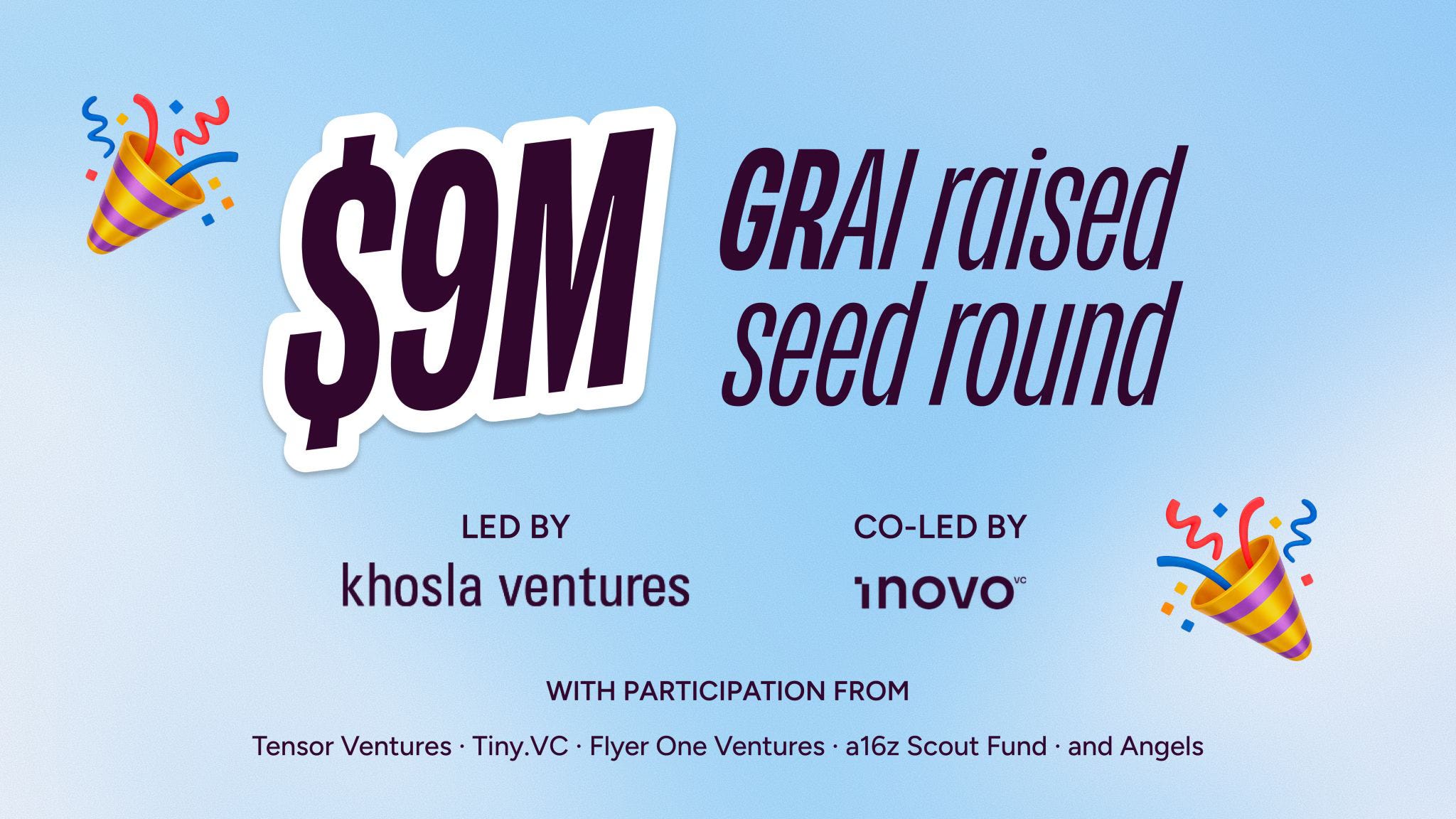
GRAI, a music AI company founded by Ilya Liasun, Andrei Avsievich, and Dzmitry Kamarouski, is building the infrastructure for what comes next. The company has just raised a $9M seed round co-led by Khosla Ventures and Inovo.vc, with participation from Tensor Ventures, Tiny Supercomputer Investment Company, Flyer One Ventures, the a16z Scout Fund, and angels Andrew Zhai, Greg Tkachenko, Rob Reid, and Dima Shvets.
Not Generation, Participation
The current AI music conversation has largely been about creation: give the model a prompt, get a song. Suno, Udio, and others have demonstrated that generating plausible music at scale is now technically tractable. But GRAI’s founding insight is that most people don’t actually want to generate music from scratch. They want to participate with music they already love — to remix a favorite track, change its style for a joke, play with a song the way you might edit a meme.
The distinction matters enormously. Creation is solitary; participation is social. And the social layer around music — the layer that drives discovery, cultural spread, fandom — is almost entirely underdeveloped compared to what AI now makes possible.
GRAI’s current products reflect this thesis directly. Music with Friends (iOS) lets users remix trending tracks collaboratively. Remix Playground (Android) offers an open-ended AI music sandbox. Both are experiments in consumer behavior as much as they are products — ways to understand how Gen Z and Gen Alpha users actually want to interact with music before culture has named the behavior.
Infrastructure Built for Artists, Not Around Them
What separates GRAI from a feature is the infrastructure layer underneath it. The company has built its own taste and participation graph, a real-time audio system, and a derivatives pipeline — technical architecture designed to transform tracks while preserving the identity of the original. Remixes are identifiably connected to their source, not detached from it.
This matters for the business model as much as the product. GRAI’s commercial thesis is that remixed derivatives can generate a new royalty stream for artists and labels — making participation economically aligned with the rights holders, not adversarial to them. Rather than deploying first and seeking forgiveness later, the company is approaching labels proactively, building opt-in/opt-out controls directly into the platform architecture.
The team brings relevant credibility here. Liasun, Avsievich, and Kamarouski previously built Vochi, a video creation app that was acquired by Pinterest — a company that understands participatory media at scale. They know what it takes to build creative tools that go viral, and they know how to negotiate the rights infrastructure that makes that legally sustainable.
Why Tensor Ventures Invested
At Tensor Ventures, we look for founding teams with rare combinations: deep technical capability, genuine product intuition, and an ability to operate at the intersection of consumer behavior and complex stakeholder ecosystems. GRAI has all three.
The music industry is one of the most technically interesting and commercially difficult markets in consumer technology. The IP landscape is Byzantine, the incumbents are powerful, and the history of startups building on licensed content without permission is not encouraging. GRAI’s approach — building the rights infrastructure first, centering artist control, and treating labels as partners rather than obstacles — is the only viable path to building something durable here.
We also believe the underlying bet is right. Music is a massive surface area for AI-driven social interaction that has barely been touched. If GRAI can establish what “participating in music” means — the verb that doesn’t yet exist — they won’t just have a product. They’ll have defined a category.
We’re proud to be part of this round alongside Khosla Ventures, Inovo.vc, and an exceptional angel syndicate. Congratulations to Ilya, Andrei, and Dzmitry — this is where the next era of music begins.