
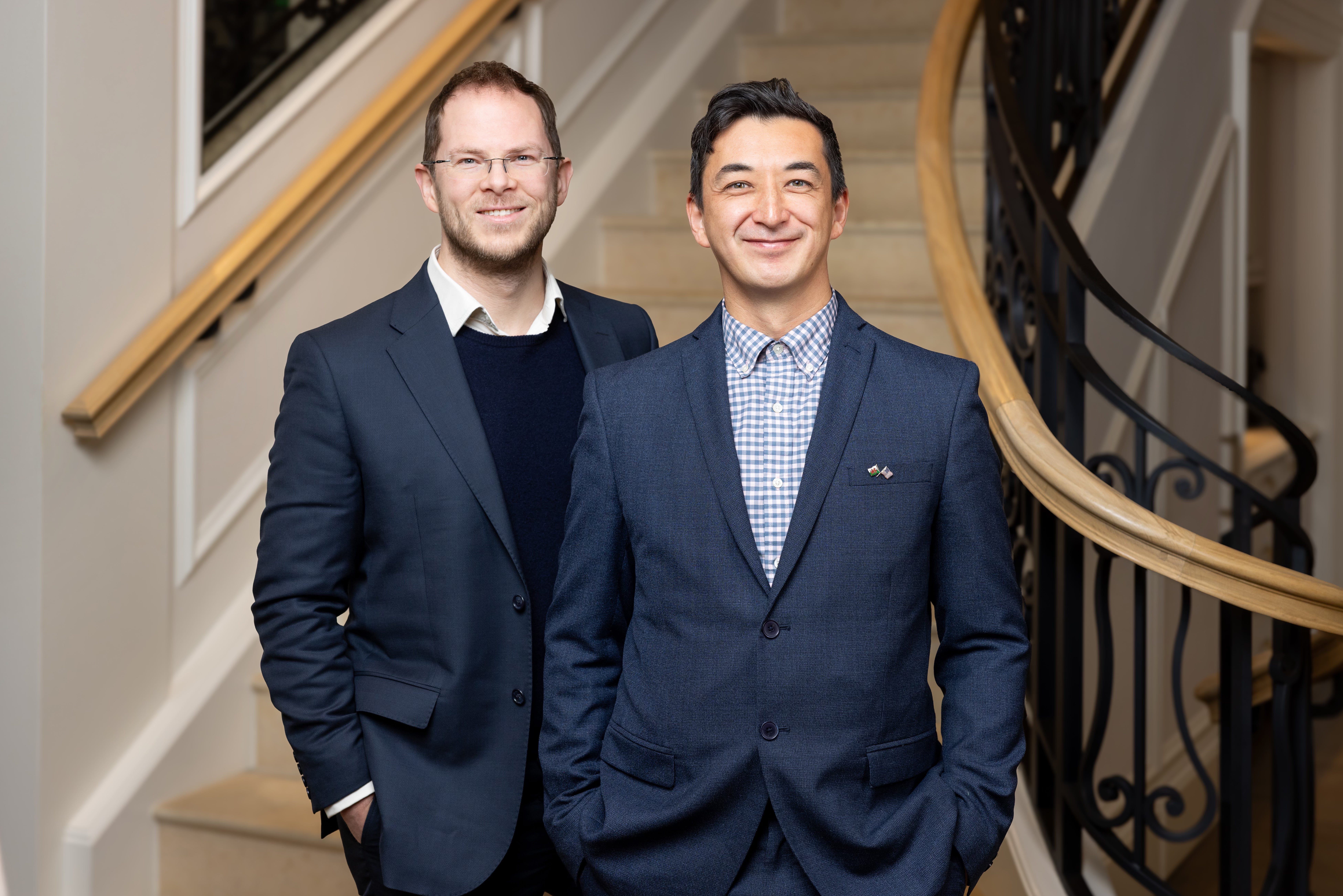
We’re excited to share that our portfolio company Antiverse has raised a $9.3 million Series A, bringing its total funding to over $20 million since inception.
The round was led by Soulmates Ventures with participation from Innovation Investment Capital and existing investors DBW, Kadmos Capital, and i&i Biotech Fund.
Alongside the financing, Antiverse also announced a research agreement with the Cystic Fibrosis Foundation to design novel antibodies targeting the extracellular region of the CFTR protein, one of the most technically challenging targets in cystic fibrosis research.
This is a major step forward, not just for the company, but for AI-driven therapeutic design more broadly.
Rethinking Antibody Discovery with AI
Antibody therapeutics have transformed modern medicine. But some of the most biologically important disease targets, including G-protein coupled receptors (GPCRs) and ion channels, have historically been extremely difficult to drug using conventional discovery methods.
Antiverse is building a different approach.
At its core is a generative AI platform trained over seven years on difficult antibody targets, capable of designing epitope-specific antibodies while optimizing for:
Binding specificity
Physicochemical stability
Developability
“Humanness” for therapeutic compatibility
But what truly differentiates Antiverse is its lab-in-the-loop model.
Rather than stopping at in silico design, the company integrates:
Proprietary programmable cell-line engineering
In-house wet lab validation
Iterative build–test–learn workflows
This tight integration between computational modelling and experimental validation dramatically accelerates the path from target identification to functional therapeutic-strength antibodies.
A Research Collaboration Targeting CFTR
As part of this announcement, Antiverse entered into a research agreement with the Cystic Fibrosis Foundation to design antibodies against the extracellular region of CFTR (Cystic Fibrosis Transmembrane Conductance Regulator).
Cystic fibrosis is a progressive genetic disease caused by mutations in the CFTR gene, leading to disrupted chloride transport and the buildup of thick mucus that damages lungs and other organs.
The extracellular portion of CFTR has remained notoriously difficult to target using traditional antibody discovery platforms.
Under the agreement:
Antiverse will use its AI modelling and optimisation platform to design novel antibodies.
Candidates will be screened using its hyper-expressing engineered cell-line systems.
Optimized antibodies will be transferred to the Foundation’s lab for testing in natively expressing cell models.
This workflow is designed to accelerate early discovery research and enable faster exploration of emerging therapeutic modalities.
Scaling the Platform, Advancing the Pipeline
The Series A financing will allow Antiverse to:
Expand its proprietary AI antibody design platform
Accelerate development of its internal therapeutic pipeline
Advance lead programs toward in vivo efficacy studies
Deepen pharmaceutical and foundation collaborations
Antiverse has already secured partnerships with multiple top-20 global pharmaceutical companies. The company is now targeting progression of its first wholly owned candidates into later-stage preclinical development by 2027.
As CEO and Co-Founder Murat Tunaboylu shared:
“Many biologically important targets have remained difficult to treat using conventional antibody discovery methods. This Series A financing enables us to scale our generative antibody design platform, accelerate our internal pipeline, and expand strategic collaborations.”
Why This Matters
Drug discovery for complex membrane proteins, GPCRs, and ion channels has long represented one of the hardest frontiers in biotech.
What makes Antiverse compelling is not simply the use of AI — it is the integration of:
Large-scale generative modelling
Target-specific antibody optimisation
Proprietary cell engineering
Real experimental validation
This full-stack, AI-native approach creates a new model for therapeutic antibody development, one capable of addressing historically “undruggable” biology.
We’re proud to see Antiverse reaching this milestone and continuing to push the boundaries of computational antibody design.
The next phase, advancing internal programs toward in vivo validation while expanding global partnerships, marks an important transition from platform development to therapeutic impact.
Congratulations to the entire Antiverse team on this achievement!