
What’s happened over the past month?
🚀 Portfolio in Action
QurieGen launched a fresh website, hosted a webinar showcasing its AI-powered drug development approach, and kicked off its expansion into New York City and Boston, key hubs for biotech and life sciences partnerships.
dstack’s published a practical Slurm migration guide to help AI teams scale infrastructure without rewriting existing workflows, a helpful step for teams moving from legacy batch systems to more flexible experimentation and deployment.
Passengera’s connectivity and data platform is now supporting autonomous shuttle tests on public roads in Hamburg, underscoring that autonomous mobility infrastructure is advancing beyond prototypes into real-world operation.
Aireen’s AI retinal screening algorithm achieved full MDR Class IIb integration with Optomed’s certified medical hardware, bringing AI-powered diabetic retinopathy screening closer to primary care and mobile programs across Europe.
Repsense’s information analytics platform reached a significant deployment milestone: it is now operational in a NATO context, validating its robustness and security in high-stakes environments.
Superface: At Generation AI Paris, Superface introduced ArcPay, the first payments solution built for autonomous AI agents, enabling machine-to-machine transactions, positioning agentic commerce as an emerging infrastructure layer.
Antiverse: Hiring a Bioinformatician to our Cardiff (UK) HQ. Join their interdisciplinary team on a mission to design antibody-based therapeutics against the targets that the big pharma cannot crack using AI methods and top-tier wet lab techniques.
More on our portfolio updates:
🚀 Portfolio Spotlight: February Edition

Our portfolio companies are kicking off 2026 with some exciting updates. Here’s what’s new:
👩🏽💻 Deep tech scene
Google just ran a fault-tolerant quantum computer that makes fewer mistakes than its own qubits. That sentence used to live in theory papers and conference fantasies. Now it’s in Nature. Quantum error correction officially left the “someday” folder. Chemistry, cryptography, optimization - buckle up.
Fusion energy quietly crossed engineering breakeven.
Not “the plasma was hot” breakeven - full system, lasers, cooling, everything.Translation: fusion is no longer a physics flex. It’s now an engineering + scaling headache. Which is exactly how real industries are born.
→ Official announcement from National Ignition Facility
18 countries just agreed to track who’s training giant AI models and how much compute they burn.
Signed in Davos, of course. No slowdown. No bans. Just: “Hey, maybe frontier compute is critical infrastructure now.” The era of vibes-based AI governance is ending. Spreadsheets have entered the chat.
💡 What we read
State of AI Report 2026 - “The Compute Era”:
The latest State of AI Report 2026 lands with a clear thesis: AI progress is now governed less by model architecture and more by compute access, energy, and geopolitics. The report details how frontier AI development has consolidated around a handful of compute-rich actors, while national strategies increasingly treat GPUs, fabs, and power grids as strategic assets, placing AI squarely in the realm of industrial policy.The Real Cost of Frontier AI (Tomasz Tunguz):
In a widely shared analysis, Tomasz Tunguz breaks down the full-stack economics of frontier AI systems, from chip fabrication and networking to cooling, power, and long-term depreciation. His conclusion: the limiting factor for next-generation AI isn’t talent or ideas, but capital intensity at unprecedented scale, reshaping who can realistically compete at the frontier.“The Return of Physics” (Nicolas Colin):
In a sharp essay, Nicolas Colin argues that technology is exiting a software-dominant phase and re-entering an era where physics, materials, energy, and hardware constraints define progress. From AI to climate tech to biotech, innovation is once again bounded by atoms, not just bits, forcing investors, policymakers, and technologists to rethink timelines, risk, and value creation.
📣 Events we loved
Our first event at Machine House office! 🚀
It was a real pleasure to kick off our first deep tech community event of the year with such a thoughtful, curious, and engaged group. We loved the conversations, the energy in the room, and the genuine connections that started over coffee and snacks.
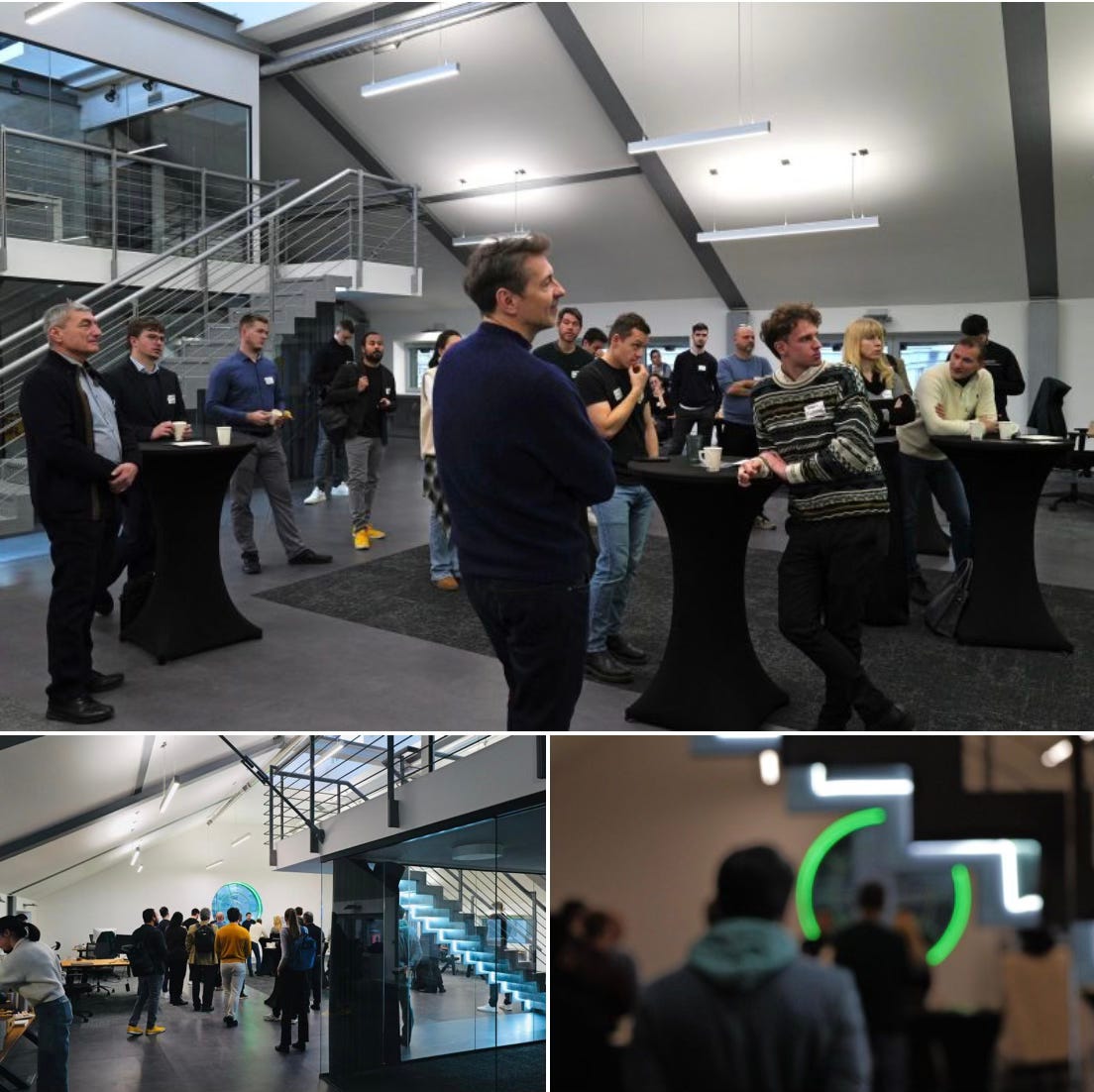
A special thank you to the team who made it all happen: Sofie Bukovska, Petr Ulvr, and Ondrej Lipold!
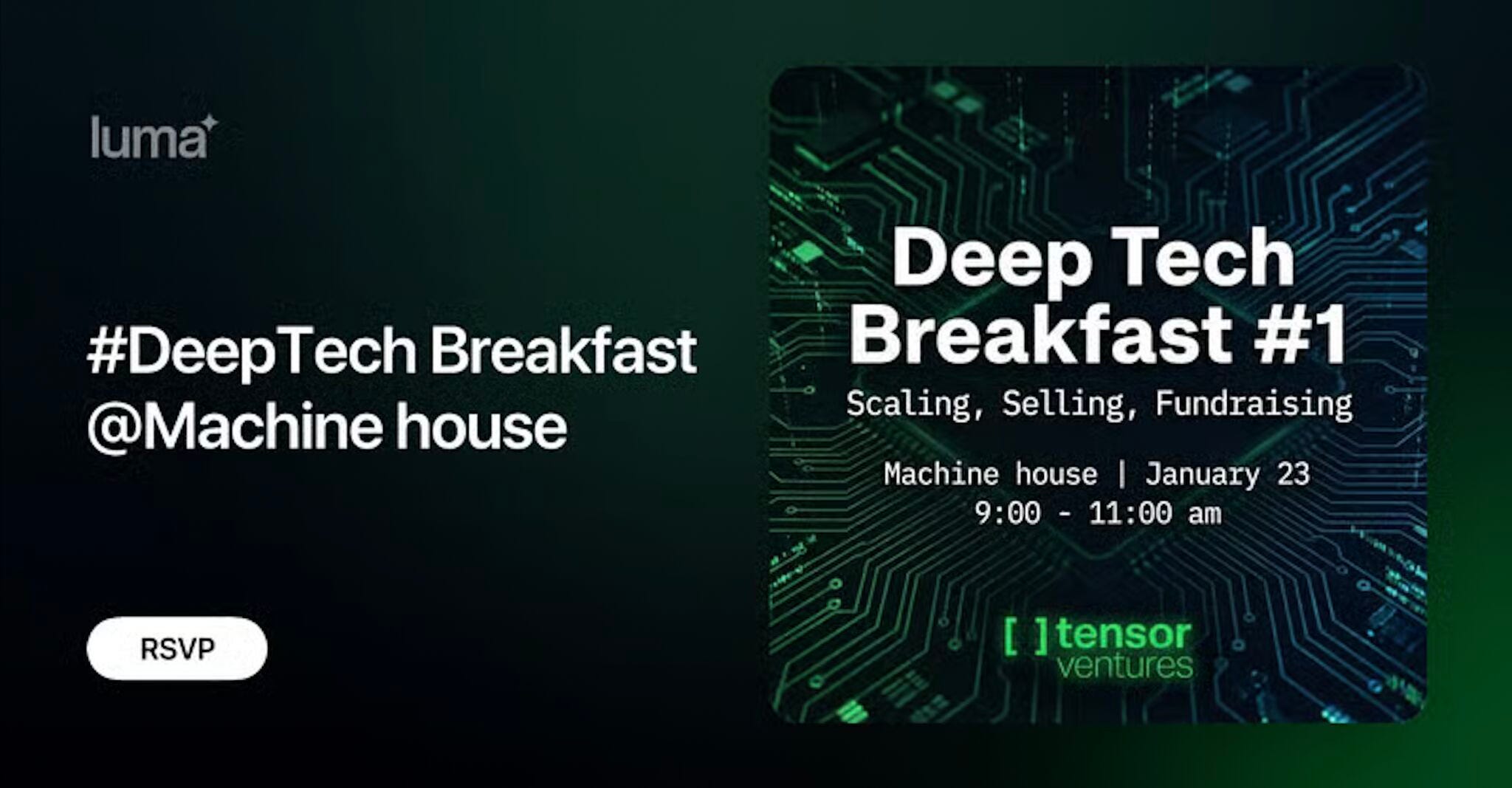
Join our next events, subscribe for the notifications: https://luma.com/isaji1ue
Cheers,
The Tensor VC team