
A packed month: four new investments, a factory-floor milestone, and enough events to keep both our Prague and SF teams on their feet.
🚀 Portfolio in Action
Cnuic: We co-led Cnuic Technologies’ $3M pre-seed alongside Blankspace Ventures, with participation from Silicon Roundabout Ventures, Phasechange, Sands Capital, and Superlative Ventures. Based in Edinburgh, Cnuic has built a fundamentally new type of photolithography device, one that uses the wave properties of light to enable rapid, reconfigurable production of photonic chips with enhanced 3D control. Something that was previously impossible.
🤗 New Investment: Cnuic Raises $3M to Rethink How Photonic Chips Are Made

The semiconductor industry has run the same basic playbook for sixty years. Photolithography — the process of etching circuit patterns onto chips using light — has been refined to extraordinary precision, but its fundamental architecture hasn’t changed. What has changed is the physics: silicon-based chips are approaching their physical limits, and the p…
GRAI: We participated in GRAI’s $9M seed round, co-led by Khosla Ventures and Inovo.vc, alongside Tiny Supercomputer Investment Company, Flyer One Ventures, the a16z Scout Fund, and angels Andrew Zhai, Greg Tkachenko, Rob Reid, and Dima Shvets. GRAI isn’t building another generative music tool. They’re building the social and interactive layer that sits on top of music you already love: remixing tracks, changing styles, sharing derivatives with friends.
🤗 New Investment: GRAI Raises $9M Seed Round to Reimagine How We Interact with Music

GRAI and the Next Era of Music Interaction
Pointee: We led Pointee’s $1.4M Seed round, with Seed Starter ČS and Seed Starter Slovenskej sporiteľne participating. Deploying one AI agent is easy. Managing hundreds, knowing what they’re doing, what they’re costing, and when they go wrong, is a fundamentally different problem. Pointee’s platform gives enterprises a unified layer to orchestrate, monitor, and govern AI agents at scale. Their core technology, Guardian Agents, acts as always-on AI operations support: detecting anomalies, tracing root causes, and automatically executing remediation playbooks.
🚀 Portfolio News: Pointee Raises $1.4M Seed to Solve the Hardest Problem in Enterprise AI

Deploying one AI agent is a product decision. Managing hundreds of them is an organizational one — and most companies aren’t equipped for it. That’s the gap Pointee was built to close, and it’s why Tensor Ventures is doubling down.
Edmund: Edmund closed a €2.5M Seed round led by FORWARD.one, with participation from University2Ventures and Tensor Ventures. Edmund builds AI agents that understand how machines actually work, down to the level of PLC programs, schematics, and maintenance histories, so factory technicians can diagnose faults in minutes instead of hours.
🚀 Portfolio News: Edmund Closes €2.5M Seed to Bring Industrial AI to the Factory Floor

Manufacturing has an invisible tax. It shows up not in the cost of raw materials or energy, but in the hours lost every time a machine stops and no one immediately knows why. By most estimates, up to 80% of unplanned downtime is spent diagnosing a fault — not fixing it. The wrench is ready. The technician is not.
AppFactor: ForgeCatalyst is now live, the agentic orchestration layer for the work nobody wants to do: corrective fixes, adaptive patches, dependency updates. Assign objectives; ForgeCatalyst runs multi-agent parallel workflows with built-in verification and human-in-the-loop controls. The maintenance treadmill, automated.
Antiverse: Co-founder Murat Tunaboylu sat down with The Entrepreneurs Network to unpack where AI-driven drug discovery is heading, from why GPCRs and ion channels remain the most compelling (and underserved) targets, to how the economics of medicine are shifting from blockbusters to personalised treatments, and why the UK’s regulatory stance might be more progressive than the headlines suggest.
PangeAI: The team launched on Product Hunt with Greenland as their playground, letting users query satellite, sensor, and geospatial data in plain English. Turns out you don’t need to buy Greenland to play with it.
👩🏽💻 Deep Tech Scene
DeepSeek drops V4: a year after rattling Silicon Valley. The Chinese lab unveiled V4 Flash and V4 Pro, with a Hybrid Attention Architecture for better long-conversation memory and a 1M-token context window that fits entire codebases in a single prompt.
Google’s TurboQuant could reshape inference economics. Unveiled at ICLR 2026, TurboQuant uses PolarQuant rotation and Johnson-Lindenstrauss compression to slash KV cache memory overhead by ~6x, the biggest bottleneck in serving large models with long contexts. As context windows grow, memory optimization may matter more than parameter count.
Cambridge builds a brain-like chip that cuts AI energy 70%. A nanoelectronic memristor made from modified hafnium oxide that processes and stores information simultaneously, mimicking how neurons work. Unlike conventional chips that waste energy shuttling data, this device operates at ultra-low power. If it scales, the implications for edge AI and data center sustainability are enormous.
MIT’s EnergAIzer predicts GPU power usage in seconds, not hours. Researchers built a framework that estimates GPU power consumption for AI workloads with only 8% error, matching approaches that take hours, but in seconds. When efficiency gains are multiplied across hyperscale compute, they translate into real megawatts saved.
GPT-5.5 enters early access. Early testing shows meaningful advances in coding, research, and creative tasks, the model excels when combined with tools, enabling complex outputs (academic papers, full software projects) with minimal input. Limitations in long-form creative writing remain, but the trajectory is clear: AI systems that do, not just draft.
📣 Events
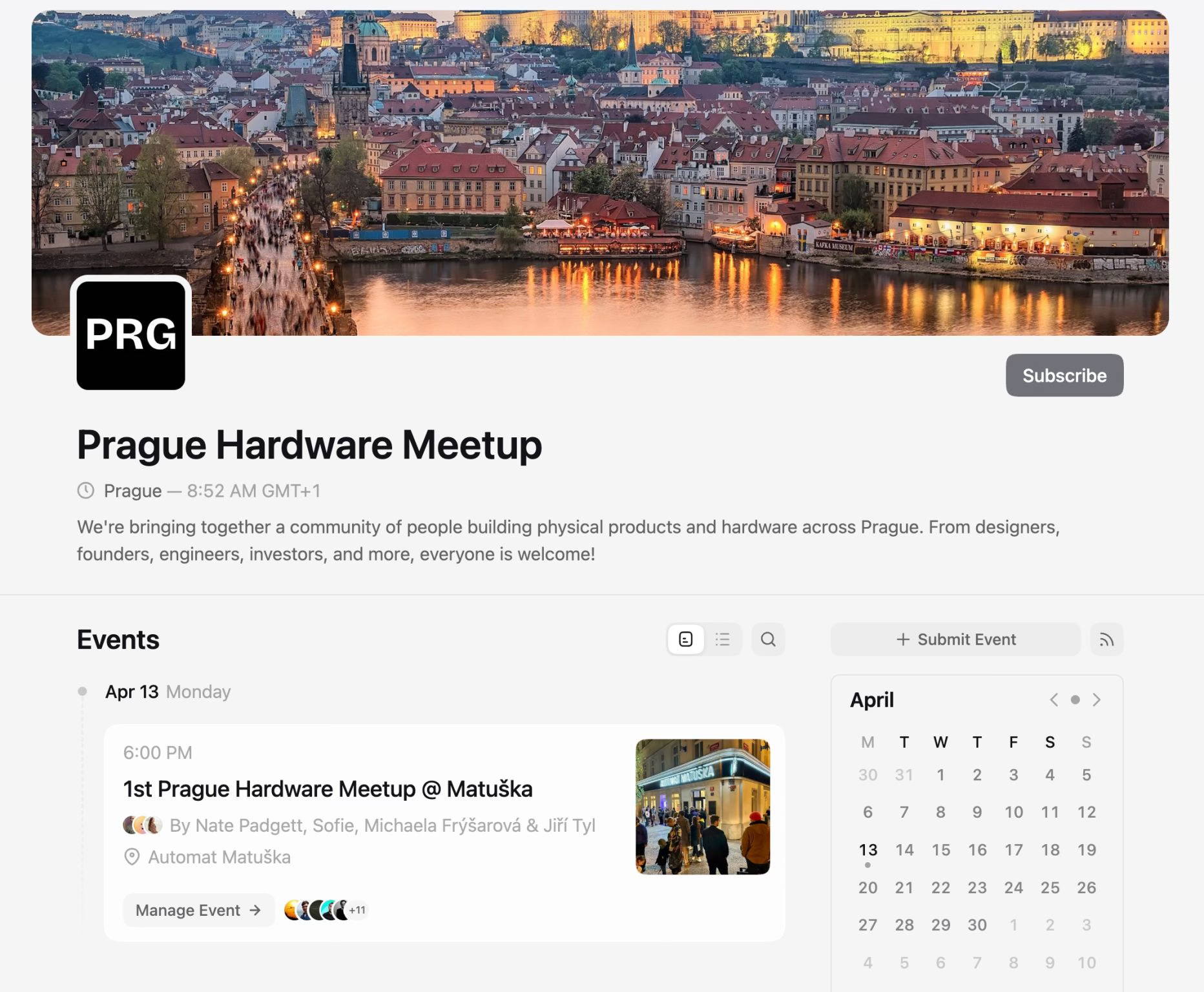
Prague Hardware Meetup × PrusaLab. The very first Prague Hardware Meetup, co-organized with PrusaLab at Automat Matuška. Brian Walker on REVEL and Physical AI; Petr Vacek on architecture, design, and digital manufacturing, plus an open mic that made the night.
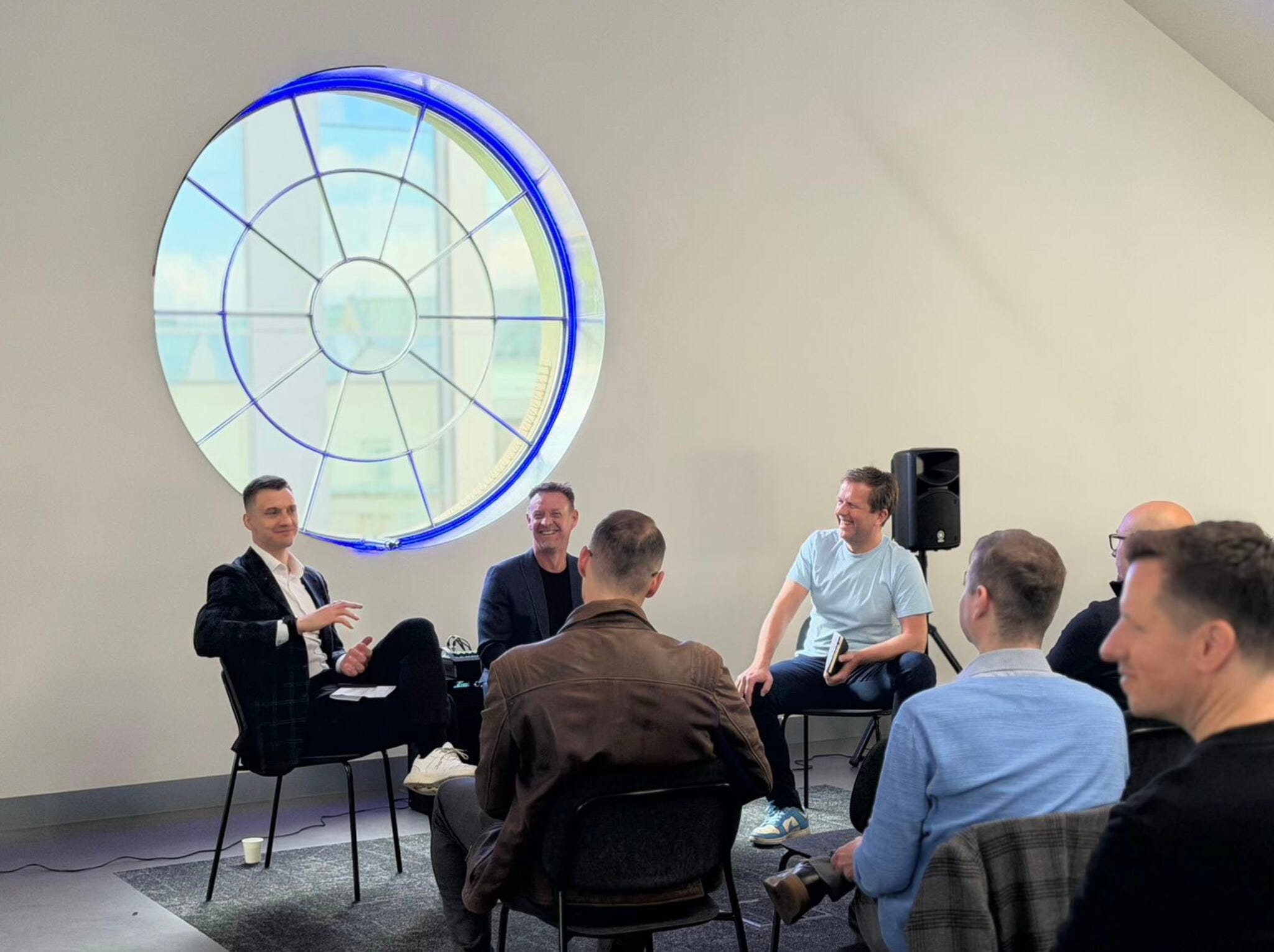
DeepTech Breakfast in Prague. Kyle Park of Harvest Management Partners joined Petr Ulvr and Jakub Kouril for an intimate gathering of founders, investors, and operators. The takeaway: CEE founders are building IP-driven companies that are not only technology breakthroughs but strategically relevant to major acquirers.
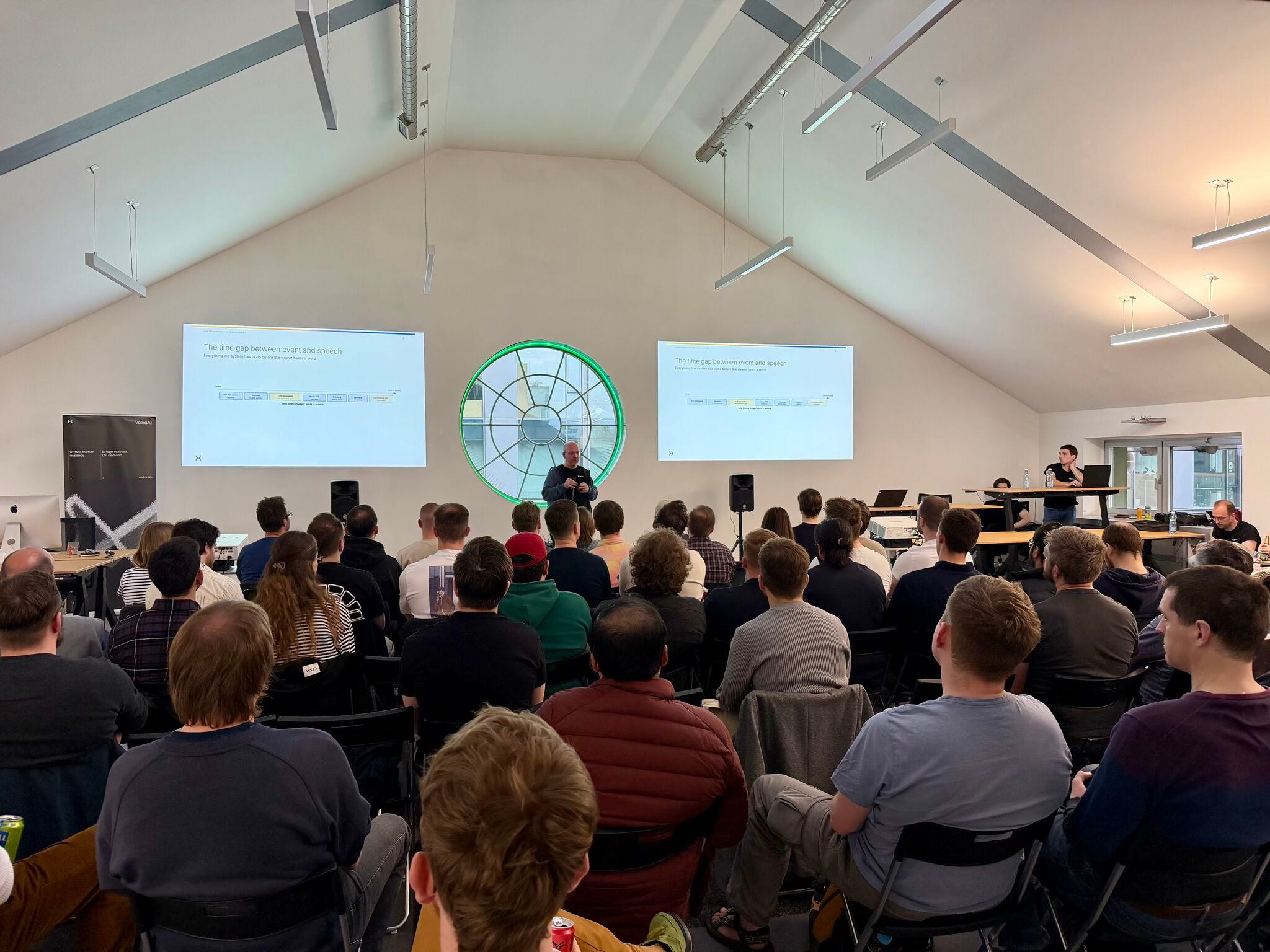
AI Tinkerers Prague × ValkaAI: Machine House Office. Engineers, researchers, and builders gathered for a deep dive into how you build a low-latency, real-time AI sports commentator. Jan Brukner, Jan Petrov, and Jan Vykruta walked through the full stack live: speech generation, LLM optimization, and real-time infrastructure. The kind of technical depth you don’t get from a slide deck.
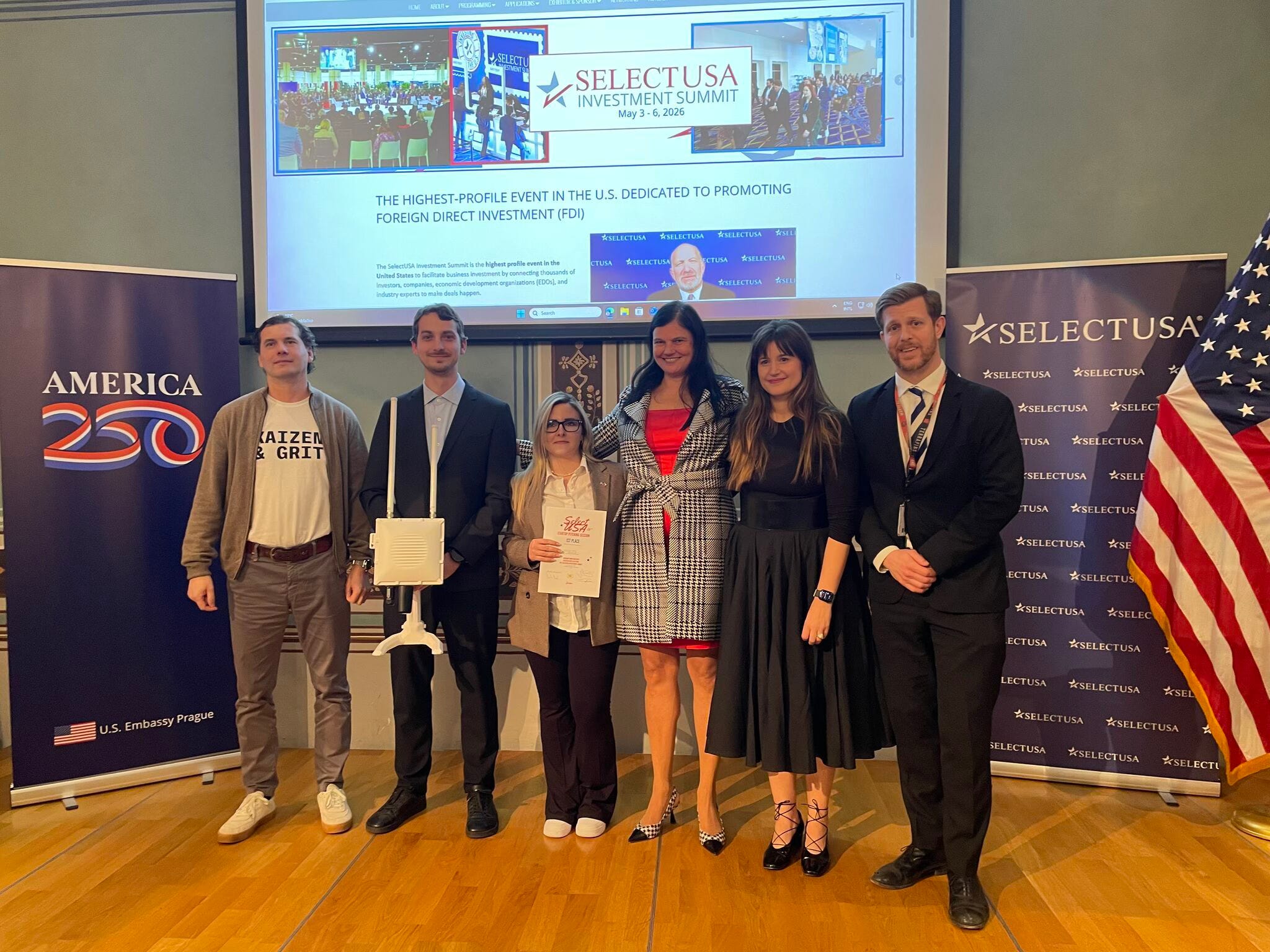
SelectUSA Startup Pitching at US Embassy Prague. Martin Drdul joined the jury alongside Senta Cermakova, Pavlína Louženská, and R. Taylor Moore. Congrats to the winners: 🥇 Dronetag, 🥈 INFRAHEX, 🥉 Mewery. Dronetag earned a free registration to the SelectUSA Investment Summit (May 3–6, National Harbor, MD).
dstack × Crusoe × SGLang: AI Infra Meetup, San Francisco (Apr 30). 500+ signups. ~200 curated attendees from the GPU space. Talks from RadixArk, Makora, Tinfoil, Metamorphic, and others.
Nuqleus Pitch Storm at CEE Deep Tech. Ondrej Lipold is joining the expert panel, evaluating the next wave of deep tech startups alongside investors from AYMO Ventures, Silicon Gardens, and Deep Tech Momentum.
Podcast: Daniel Hastik on Budoucnost nepráce. Three signals from the conversation: (1) The CEE opportunity is real, and time-bound. (2) AI is infrastructure, not a feature, that’s the line separating deep tech from everything else. (3) How a team uses AI internally tells us more than their product roadmap. Listen here →
DYNANIC × Verification Academy Live, Brno (May 21). A full-day seminar on functional verification at FIT VUT Brno, co-organized by DYNANIC. Three sessions from the team: Marcela Zachariasova and Lukáš Kekely on DYNANIC productivity with Questa One, AI adoption in verification (based on an industry-wide survey), and a closing panel on the role of AI in verification.
Cheers,
The Tensor VC team